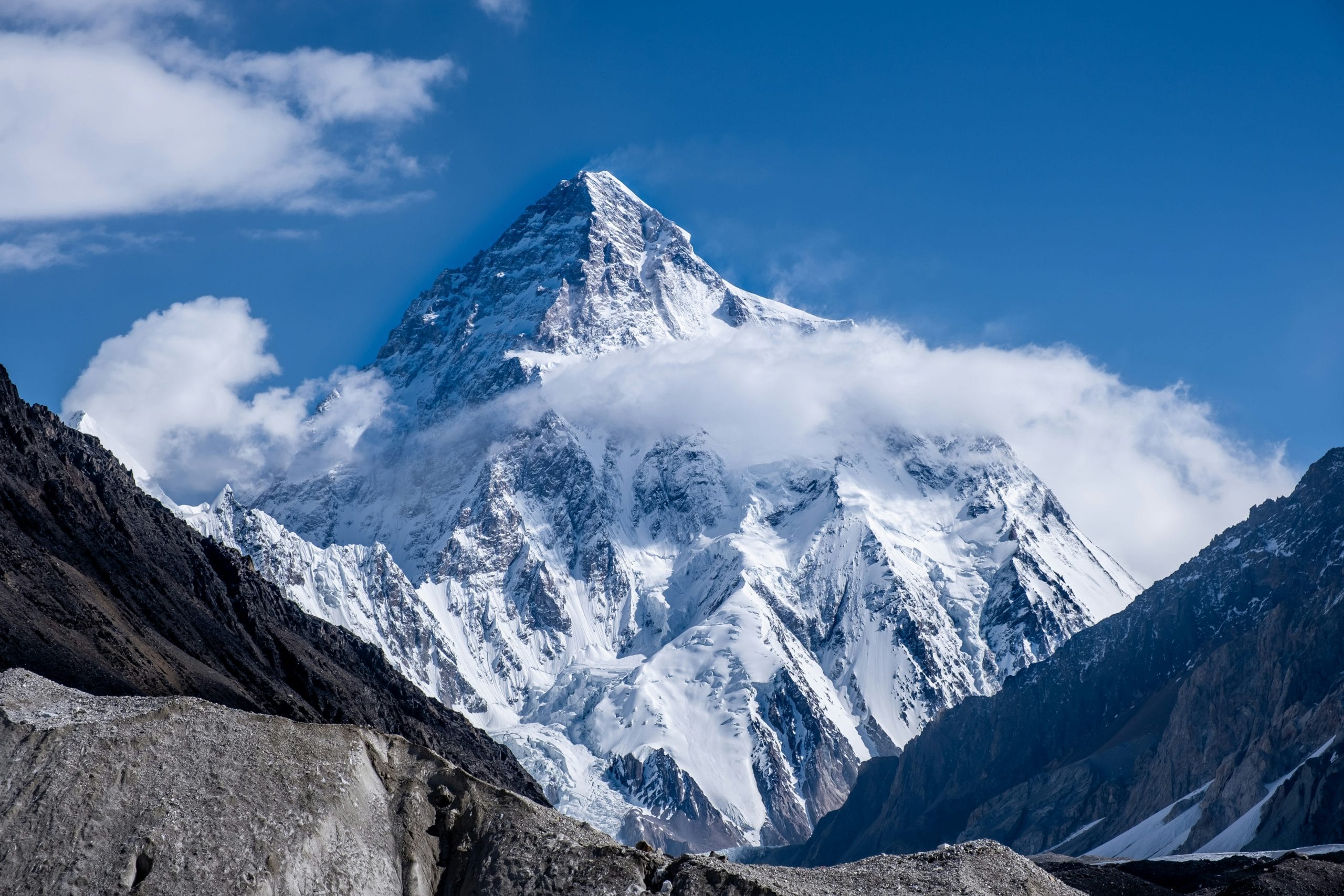
Trekking to K2 Base Camp is more than just a hike—it’s a journey through some of the most breathtaking and remote landscapes on Earth. Known as the Savage Mountain, K2 (8,611m) is the second-highest peak in the world and one of the most challenging mountains to summit. However, reaching its base camp at 5,150m is an adventure that offers unparalleled views, thrilling challenges, and a true test of endurance.
Set in Pakistan’s Karakoram Range, this trek takes you through rugged glaciers, towering peaks, and vast wilderness, leading to one of the most legendary spots in mountaineering history. Unlike the Everest Base Camp trek, which is more commercialized, K2 Base Camp remains wild and untouched, drawing only the most passionate trekkers and adventure seekers.
I still remember standing at Concordia, surrounded by some of the highest peaks on Earth—K2, Broad Peak, Gasherbrum IV. It was a moment where time seemed to stop, and the sheer power of nature took my breath away.
If you’re planning the K2 Base Camp Trek in 2025, this guide will walk you through everything you need to know—best routes, preparation tips, packing essentials, permits, and expert advice.
Why Trek to K2 Base Camp?
Unlike other high-altitude treks, K2 Base Camp offers a raw, untouched adventure.
Here’s why you should add it to your bucket list:
- Unrivaled Scenery – Stand in the heart of the Karakoram, surrounded by some of the tallest and most challenging peaks in the world.
- A True Trekker’s Challenge – With glacier crossings, rugged terrain, and remote landscapes, this trek is for those looking for a true adventure.
- Less Crowded Than Everest Base Camp – While EBC sees thousands of trekkers annually, K2 Base Camp remains off the beaten path, offering a pure wilderness experience.
- The Legendary Concordia – Known as the throne room of the gods, Concordia is one of the most breathtaking viewpoints on Earth.
Best Time to Trek to K2 Base Camp
The ideal months for the K2 Base Camp trek are June to September. These months offer:
June – Early in the season, stable weather but cooler temperatures.
July – Peak season with the best conditions, warmer temperatures, and clearer skies.
August – Slightly warmer, but chances of cloudy weather increase.
September – Fewer trekkers, colder nights, but stunning autumn landscapes.
K2 Base Camp Trek Itinerary (2025)
Day 1: Arrive in Islamabad
Meet your trekking team, sort permits, and explore Pakistan’s capital before flying to Skardu.
Day 2: Flight to Skardu or Drive via Karakoram Highway
Flight option: 1-hour flight with stunning aerial views of Nanga Parbat and the Karakoram Range.
Drive option: A 2-day road trip via the Karakoram Highway, offering incredible landscapes but requiring endurance.
Day 3: Rest and Final Preparations in Skardu
Acclimatization and gear checks before heading toward the trek’s starting point.
Day 4: Jeep Ride to Askole (3,000m)
A thrilling jeep journey through rocky valleys takes you to the last village before the trek begins.
Day 5-12: Trekking to K2 Base Camp via Baltoro Glacier
Day 5: Askole to Jhola (3,200m) – The trek begins with river crossings and rocky trails.
Day 6: Jhola to Paiyu (3,666m) – Stunning views of Paiyu Peak and Trango Towers.
• Day 7: Rest Day at Paiyu – Acclimatization and preparation for the glacier trek.
Day 8: Paiyu to Urdukas (4,130m) – Entering the Baltoro Glacier, with views of Cathedral Towers.
Day 9: Urdukas to Goro II (4,250m) – A challenging day of glacier walking, with sights of Masherbrum and Broad Peak.
Day 10: Goro II to Concordia (4,650m) – Arrive at the throne room of the gods, with K2 towering in the distance.
Day 11: Trek to K2 Base Camp (5,150m), then return to Concordia – The most iconic day of the trek.
Day 12: Extra day for weather or exploration.
Day 13-18: Return Trek via the Same Route
Retrace your steps back to Askole, then drive to Skardu.
Day 19: Return to Islamabad
Fly or drive back to Islamabad and celebrate completing one of the world’s most epic treks.
Essential Packing List for K2 Base Camp Trek
Clothing: Layered trekking gear, down jacket, waterproof shell, gloves, thermal base layers.
Footwear: Sturdy trekking boots, crampons (for icy conditions), extra socks.
Camping Gear: Sleeping bag (-15°C to -20°C), trekking poles, backpack (50-70L).
Health & Safety: Acclimatization medications, personal first aid kit, water purification tablets.
Documents & Permits: Passport, visa, trekking permits, travel insurance covering high-altitude trekking.
How Difficult Is the K2 Base Camp Trek?
This trek is considered challenging due to:
Rough terrain and glacier crossings – Expect rocky paths, icy sections, and steep ascents.
Long trekking days – Most days require 6-8 hours of trekking in high-altitude conditions.
Altitude acclimatization – The highest point is 5,150m, requiring proper altitude adjustment to prevent AMS.
Training Tip: Prepare with hiking, endurance workouts, and altitude training at least 3-4 months before departure.
Permits and Costs for K2 Base Camp Trek (2025)
Trekking Permits: Issued by the Pakistan Ministry of Tourism.
NOC (No Objection Certificate): Required for foreign trekkers.
Trek Cost: $3,500 – $5,000 (includes permits, guides, porters, food, and accommodation).
Expert Tips for the K2 Base Camp Trek
1. Train for endurance – Build stamina with long hikes and strength training before the trek.
2. Pack smart – Carry only essentials to keep your load light.
3. Hydrate constantly – Glacier trekking dehydrates faster than regular hiking.
4. Respect the environment – Follow Leave No Trace principles to protect this pristine region.
5. Mentally prepare – This is not a beginner trek; expect harsh conditions and long days.
Is the K2 Base Camp Trek Worth It?
The K2 Base Camp Trek is one of the most spectacular and rewarding treks on Earth. It is challenging, remote, and requires determination, but the experience of standing at the foot of the mighty K2, surrounded by giants of the Karakoram, is truly life-changing.
If you’re ready for the adventure of a lifetime, start planning your K2 Base Camp Trek 2025 today!
Ready to Conquer the K2 Base Camp Trek?
Plan Your K2 Base Camp Trek Now!
FAQs about K2 Base Camp Trek
1. How long does it take to trek to K2 Base Camp?
The K2 Base Camp trek typically takes 18-20 days. This includes trekking time, rest/acclimatization days, and travel to and from Skardu. The trek itself takes about 12-14 days round-trip, depending on weather conditions and individual pace.
2. What is the best time to trek to K2 Base Camp?
The best time for the K2 Base Camp trek is between June and September. During these months, the weather is more stable, the trails are accessible, and visibility is best for mountain views.
3. How difficult is the K2 Base Camp trek?
This trek is considered challenging, requiring physical fitness, stamina, and prior trekking experience. Trekkers must be prepared for long hiking days (6-8 hours), glacier crossings, rocky trails, and high altitudes. Acclimatization is essential to avoid altitude sickness.
4. What permits are required for the K2 Base Camp trek?
Foreign trekkers need:
Trekking Permit – Issued by the Pakistan Ministry of Tourism.
No Objection Certificate (NOC) – Required for foreign visitors traveling in Gilgit-Baltistan.
Visa for Pakistan – Obtainable online or through a Pakistani embassy.
Most tour operators handle the permit process for you.
5. What is the cost of the K2 Base Camp trek?
The cost of the trek ranges from $3,500 to $5,000 per person, covering permits, guides, porters, accommodation, food, and logistics. The price may vary depending on the tour operator, group size, and inclusions like domestic flights and personal gear rentals.
6. Do I need prior trekking experience for K2 Base Camp?
Yes. While you don’t need to be an elite mountaineer, prior high-altitude trekking experience is recommended. The trek includes rough terrain, glacier crossings, and extreme conditions, making it unsuitable for beginners.
7. How do I train for the K2 Base Camp trek?
Training should begin at least 3-4 months before the trek. Focus on:
Endurance – Hike regularly with a backpack to build stamina.
Cardiovascular fitness – Running, cycling, and stair climbing help prepare for high-altitude trekking.
Strength training – Leg workouts and core exercises improve balance and trekking efficiency.
8. What should I pack for the K2 Base Camp trek?
Essential gear includes:
Clothing – Layered trekking clothes, down jacket, waterproof gear.
Footwear – Sturdy trekking boots, warm socks.
Sleeping Gear – Sleeping bag (-15°C to -20°C rating).
Health & Safety – Acclimatization medication, first aid kit, water purification tablets.
Trekking Equipment – Backpack (50-70L), trekking poles, gloves, sunglasses.
9. What is the altitude of K2 Base Camp?
K2 Base Camp sits at 5,150 meters (16,896 feet) above sea level. The highest point on the trek is Concordia (4,650m) before reaching Base Camp.
10. What is the accommodation like on the trek?
Accommodation is mostly camping-based, with tents set up along the route. Some basic lodges exist in Skardu and Askole, but once you start trekking, expect to sleep in tents on glaciers and rocky terrains.
11. Is it safe to trek to K2 Base Camp?
Yes, the trek is safe with an experienced guide and proper preparation. The major risks include:
Altitude sickness – Acclimatization days help prevent AMS (Acute Mountain Sickness).
Unpredictable weather – The Karakoram is known for sudden storms and temperature drops.
Rough terrain – Trekking on glaciers and moraines requires caution.
12. How do I get to the starting point of the trek?
Trekkers usually:
Fly from Islamabad to Skardu (1-hour flight, weather-dependent).
Take a 2-day road trip via the Karakoram Highway if flights are canceled.
Take a jeep ride from Skardu to Askole, the last village before the trek begins.
13. What food is available during the trek?
Trekkers are provided with simple but nutritious meals, usually consisting of:
Dal (lentils), rice, chapati, pasta, vegetables, and eggs.
Hot soups, tea, and coffee for warmth.
Dried fruits, nuts, and energy bars as trekking snacks.
14. Can I trek solo to K2 Base Camp?
No, trekking solo is not allowed due to safety regulations. A licensed guide and local porters are required for permits, navigation, and logistics.
15. Is travel insurance required for the K2 Base Camp trek?
Yes, travel insurance covering high-altitude trekking (above 5,000m) is mandatory. It should include:
Emergency evacuation (helicopter rescue in case of altitude sickness or injury).
Medical coverage for high-altitude sickness.
Trip cancellation in case of weather delays or unforeseen events.
16. How cold does it get at K2 Base Camp?
Temperatures vary by season but can drop to -10°C to -20°C (14°F to -4°F) at night. Even in summer, the weather can be harsh and unpredictable.
17. Can I charge my electronics during the trek?
Power is limited. Some camps may have solar charging stations, but it’s best to carry a power bank and spare batteries for cameras and devices.
18. What is the biggest challenge of the K2 Base Camp trek?
The Baltoro Glacier crossing is one of the most challenging sections, with unstable ice, crevasses, and constant elevation changes. Additionally, the trek’s long duration and altitude gain make it a test of both physical and mental endurance.
19. Are there toilets and showers on the trek?
Basic toilet tents are set up at camps, but there are no proper showers. Trekkers usually use wet wipes and dry shampoo for hygiene.
20. What makes the K2 Base Camp trek unique?
Unlike Everest Base Camp, the K2 trek remains wild, remote, and untouched. Trekkers experience some of the most dramatic mountain scenery in the world, fewer crowds, and a true sense of adventure in one of the last great wildernesses on Earth.